Edition No. 3 · Folklore Friday
Is There Really a Mermaid Legend in Greece?
The story sailors still tell when the wind picks up over the Aegean
July 31, 2026 · 5 min read
Okay… come sit with me for a minute, because I have to tell you one of my favorite Greek legends — and no, I don't mean the Disney kind.
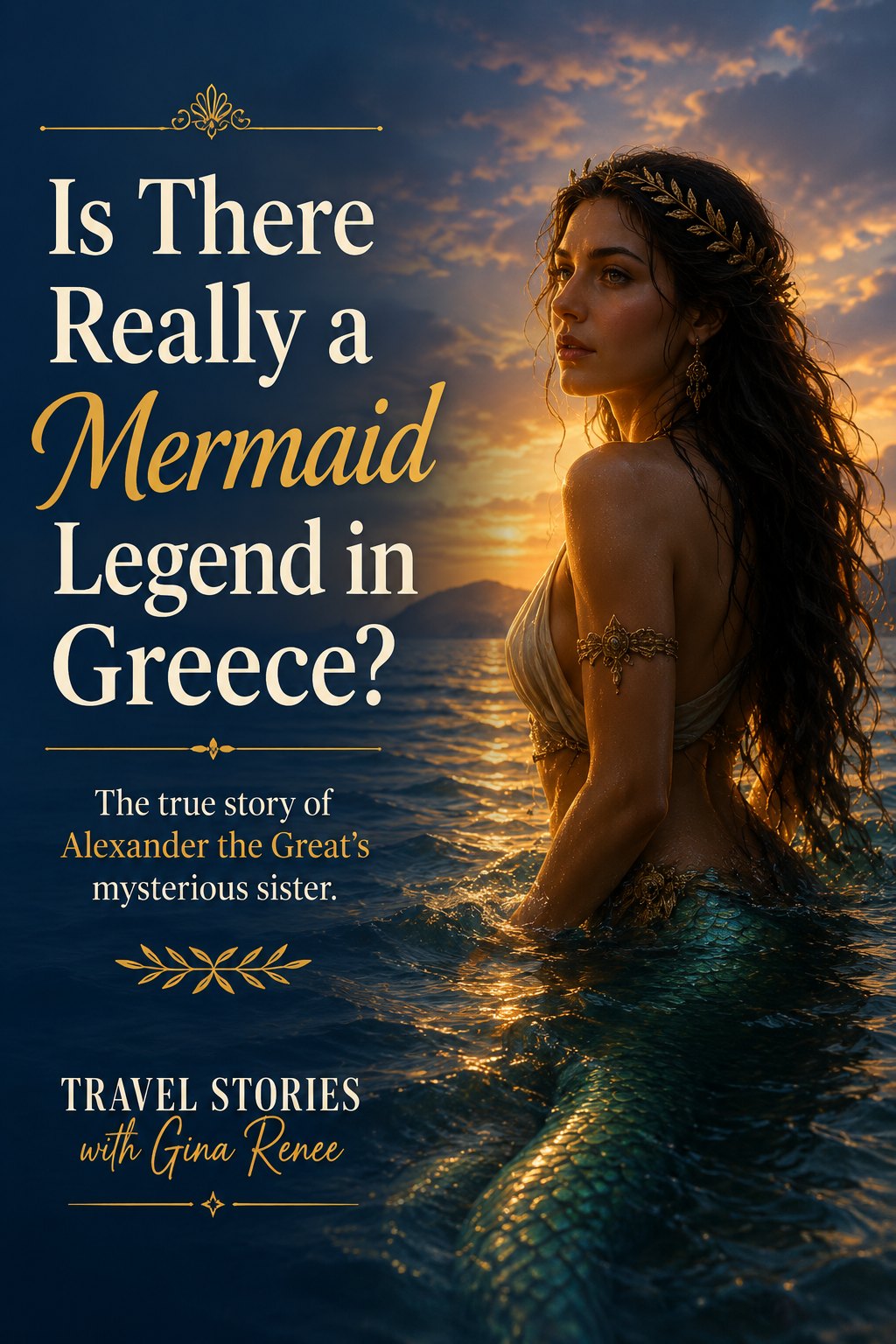
Her name was Thessalonike — and unlike most mermaids, she began as a real woman. She was the half-sister of Alexander the Great and the daughter of King Philip II of Macedon. She lived her whole life in the middle of the biggest story in the ancient world, and by most accounts, she never asked for any of it.
Here's where the history hands the story off to legend. Alexander, so the tale goes, traveled to a spring said to hold the water of immortality. Depending on which version you hear, Alexander used the water on her hair, she drank it herself, or the water reached her through some other twist of fate. Folklore is wonderfully inconsistent that way. But every version agrees on one thing: Thessalonike could no longer die.
When Alexander died, grief did what grief does — it sent her straight to the water. She walked into the sea to end her life. But because she could no longer die, the sea couldn't take her. Instead, it changed her. She became a mermaid — and not a soft, singing, storybook one. A Gorgona: beautiful above the waist, and something far stranger and more powerful below it.
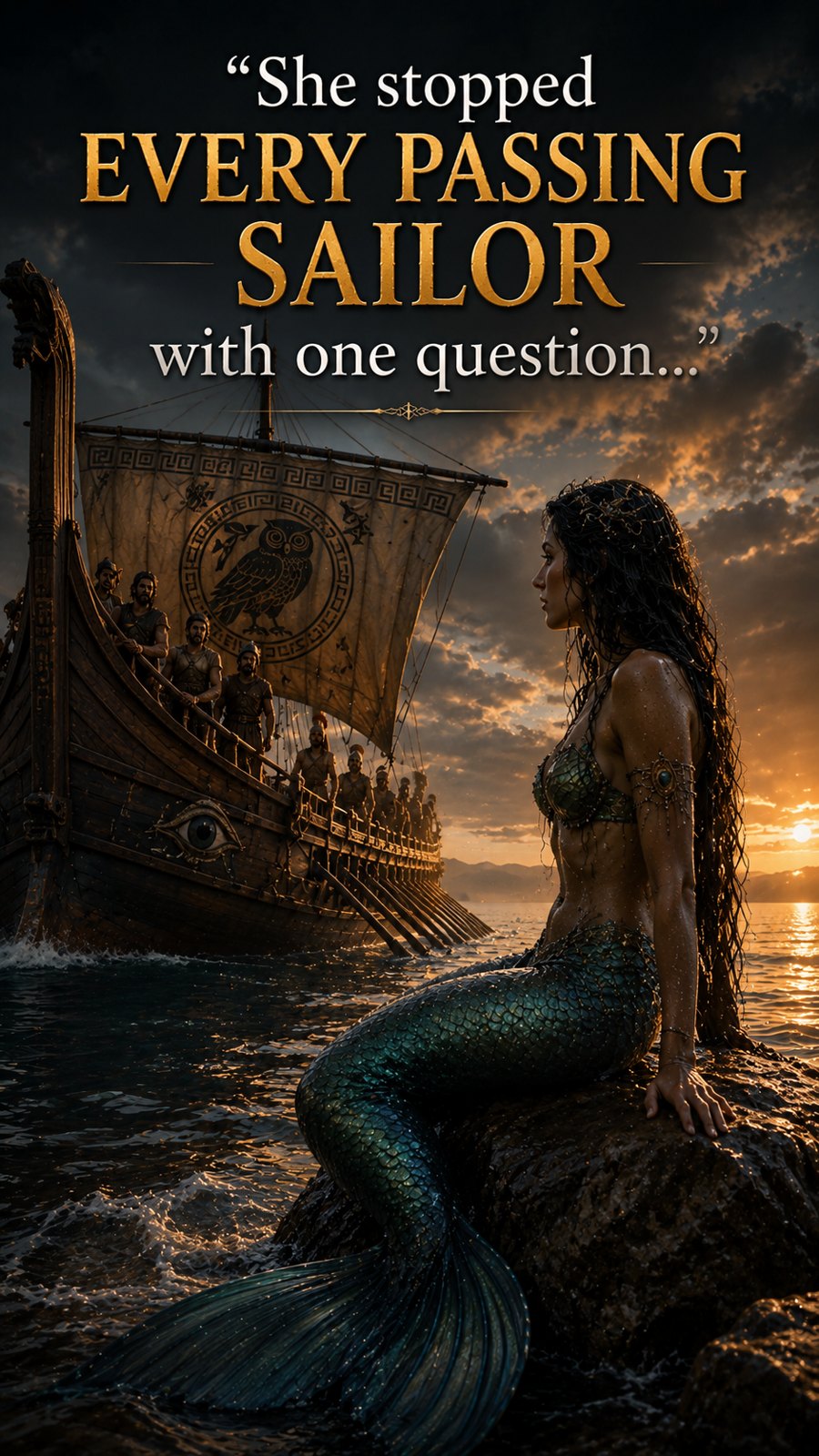
For centuries after, sailors crossing the Aegean and the Black Sea told the same story. Sailors said she would rise beside passing ships and ask one question, and only one question, every single time: "Is King Alexander alive?"
There was exactly one right answer: "He lives and reigns, and conquers the world." Say that, and the seas went glassy calm, and she'd slip back under to let you pass. Say anything else — hesitate, tell her the truth, get it wrong — and she'd become the Gorgon. The sea would rise up around the ship like it had a grudge of its own.
What I love about this one isn't just the drama of it, though there's plenty. It's that fifteen hundred years after Alexander died, sailors were still keeping him alive with their own mouths — out of superstition, out of habit, out of something between fear and love for a king most of them had never lived to see. That's a strange kind of immortality. Not the water from the spring. The story itself.
At a Glance
Where: The Aegean Sea, with the legend's roots tied closely to Thessaloniki, Greece's second-largest city, which still carries her name.
Best time to go: Late spring or early fall offers warm weather with fewer peak-summer crowds. Summer is beautiful, but the Aegean can also be famously windy.
Getting there: Most itineraries reach Thessaloniki by air into Thessaloniki International Airport (SKG), or by sea on Aegean-focused cruise itineraries.
Good to know: In modern Greek, a mermaid may be called a gorgóna — the same word often used for Thessalonike in versions of the legend.
Question & Answer
Question: Is there really a mermaid legend in Greece?
Answer: Yes — and it's one of the most enduring folk legends in the Aegean. It centers on Thessalonike, the historical half-sister of Alexander the Great, who Greek folklore says became an immortal mermaid after his death. For centuries, sailors told of her rising beside passing ships to ask if Alexander still lived — and answering correctly meant a safe voyage.
Gina's Travel Tip
If you're sailing the Aegean and want to feel this story instead of just reading about it, spend an evening in Thessaloniki's old harbor at sunset. Ask a local about "the Gorgona," and don't be surprised if they know the question by heart, even now. Folklore like this doesn't live in museums in Greece — it lives in conversation.
Beyond the Guidebook
Historians will tell you plainly: there is no evidence Thessalonike ever became a mermaid. She was a real Macedonian princess who lived a difficult, politically tangled life and was ultimately murdered by her own son. That's the fact.
The legend is something else entirely — a folk story that grew up around her memory over centuries, blending real history with older Greek myths about gorgons and sea spirits that predate her by hundreds of years. Where the history ends and the folklore begins is genuinely blurry, and Greek storytellers have never seemed too worried about untangling it. Some stories are more interesting left woven together.
Gina's Two Cents
Okay… I already know I would have been the sailor nervously practicing the correct answer before we ever left port. 😂
But honestly, this is exactly why I love folklore. Alexander couldn't live forever — but people kept him alive every time they repeated the answer. Sometimes the story becomes more immortal than the person ever could.
Thinking About Visiting?
If this story has you dreaming about Greece, don't skip Thessaloniki just because everyone talks about Santorini and Mykonos. Walk along the waterfront at sunset, ask a local about the Gorgona, and see if they smile before telling you the story.
Because sometimes the places you remember most aren't just beautiful…
They're the ones that leave you with a story to bring home.

The next story is already waiting — but first, I'm heading to sea to gather a few new ones of my own.