
Why Does Greece's Most Famous Drink Turn White?
The ouzo effect explained — and how to drink ouzo the Greek way
Updated July 30, 2026 · 3 min read
The short answer: ouzo turns white because its anise oils dissolve in alcohol but not in water. Adding water forces those oils out of solution as millions of microscopic droplets that scatter light — an effect known as the ouzo effect.
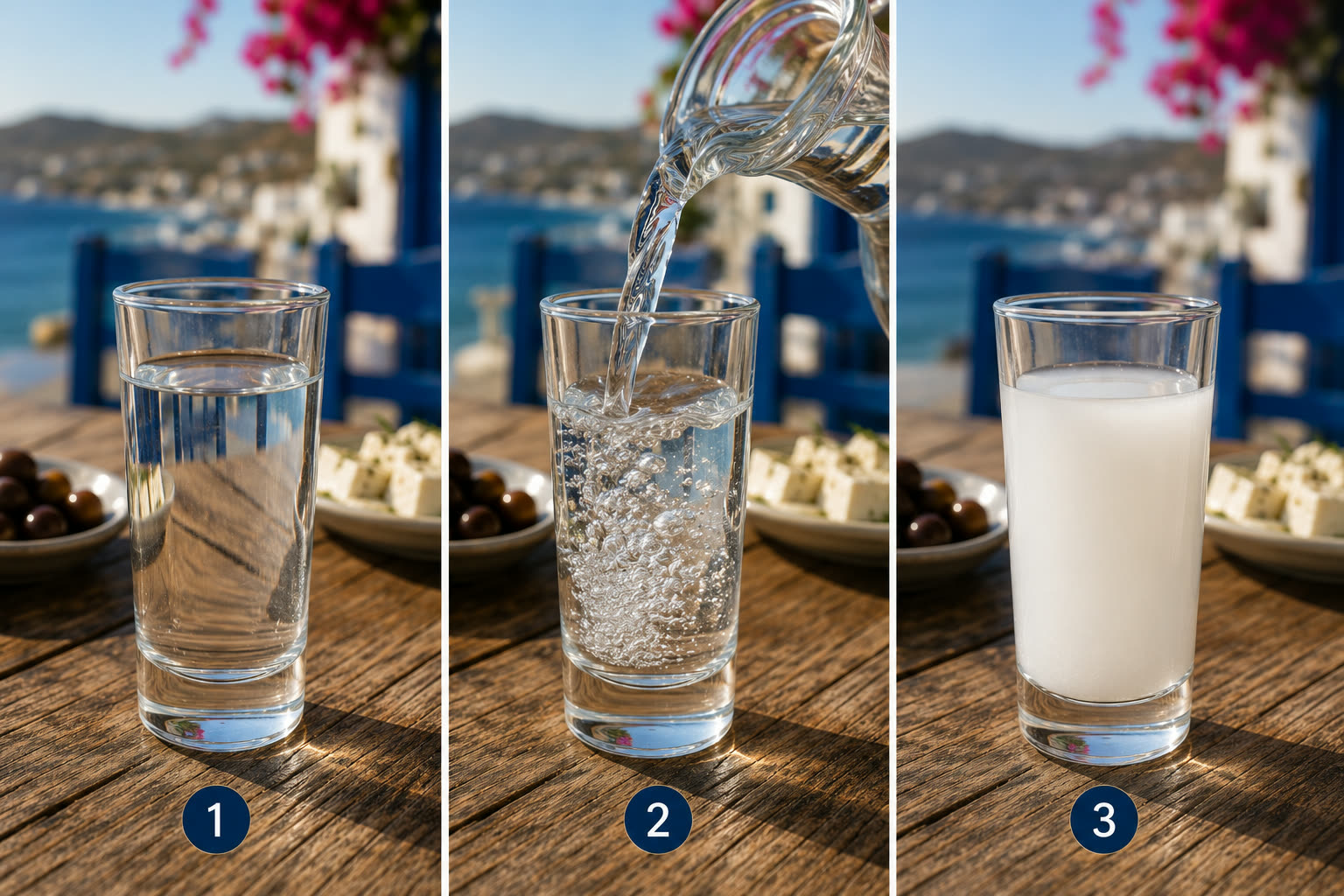
What causes the ouzo effect?
Ouzo is flavored with anise, whose essential oils are alcohol-soluble and poorly water-soluble. When water lowers the alcohol concentration in the glass, the oils spontaneously form an emulsion of droplets far too small to rise or separate. Instead they scatter light in every direction, so the liquid reads as milky white. No stirring is required, and the emulsion stays remarkably stable — which is why researchers still study it as a model of spontaneous emulsification. Absinthe's "louche" works the same way.
Why cloudier once meant better
Long before the chemistry was described, Greek innkeepers used the cloud as a quality test. A thin or adulterated ouzo lacked enough real anise oil to cloud properly, so a strong milky swirl was visible proof that a guest was being served the genuine article. The ritual endures as a small, visible act of hospitality.
How to drink ouzo in Greece
- Order it with water and ice for the full effect — add water first, then ice.
- Sip slowly over conversation; ouzo is a long, social drink, not a shot.
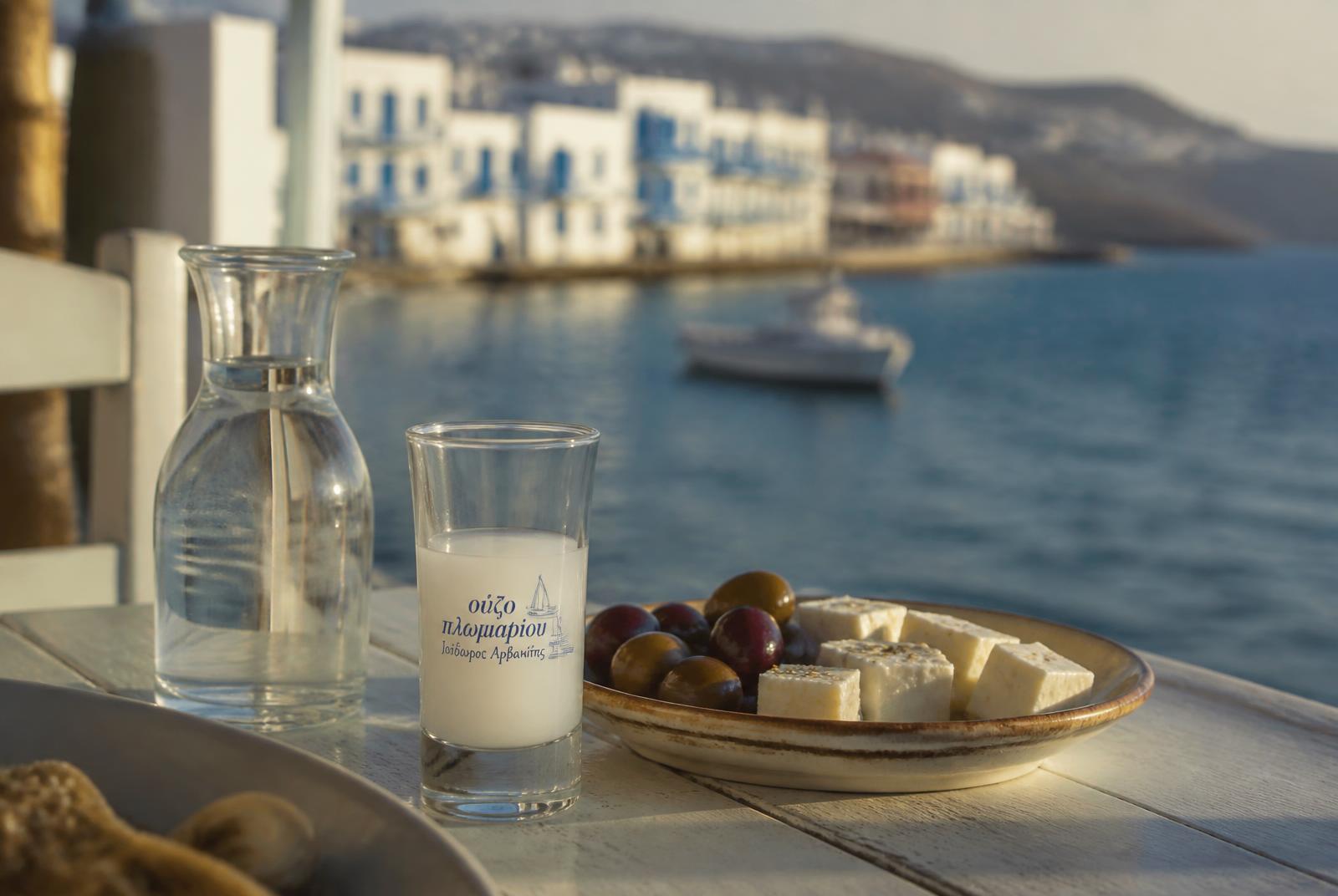
- Pair it with mezedes — olives, feta, grilled octopus, small plates — rather than drinking it alone.
- Look for it at tavernas, ouzeries and corner cafes throughout the country.
- On Lesvos, seek out Plomari ouzo, widely considered among the finest in Greece.