
Edition No. 2 · Thirsty Thursday
Why Does Greece's Most Famous Drink Turn White?
The ouzo effect — and the centuries-old hospitality test hiding in the bottom of a glass.
July 30, 2026 · 4 min read
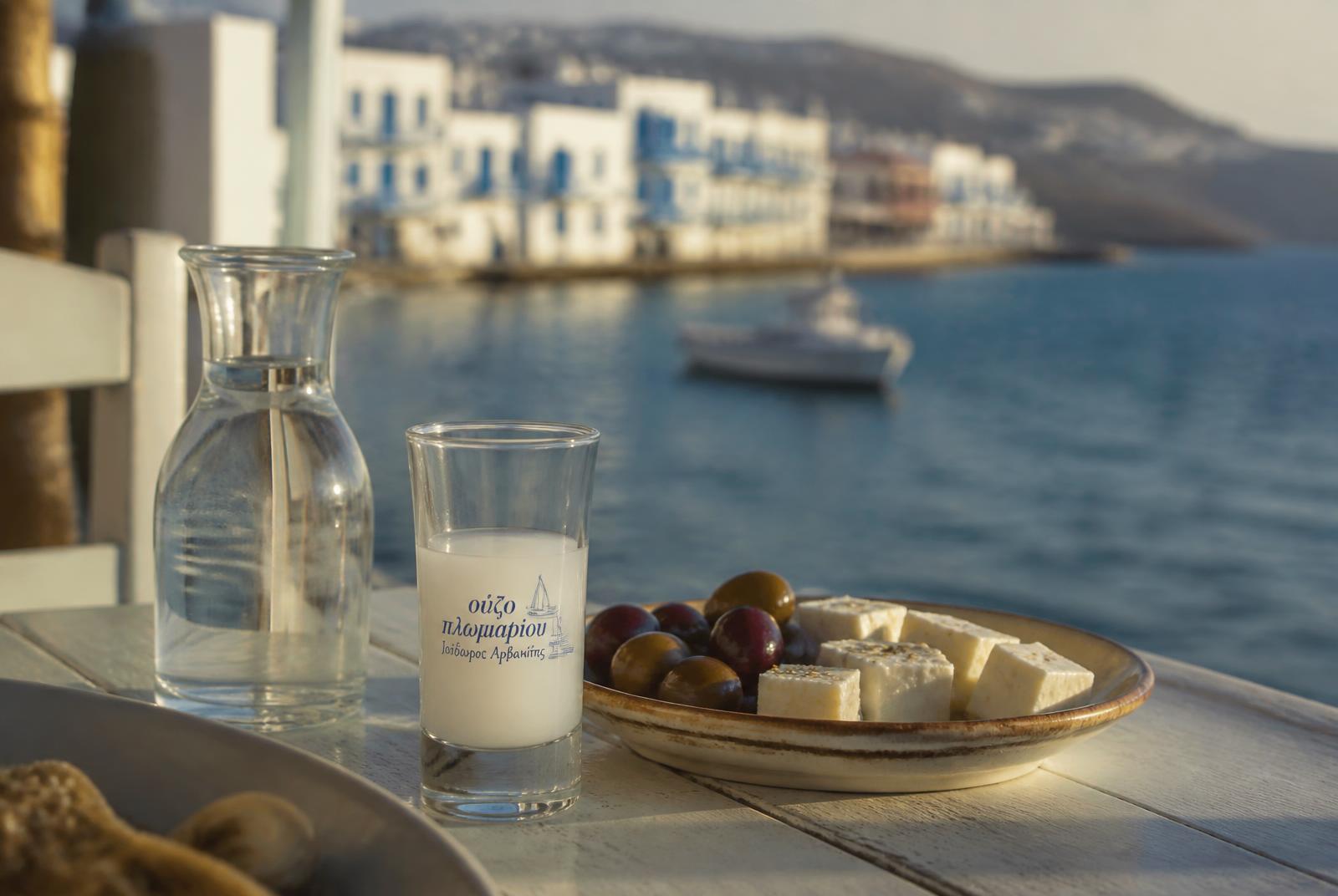
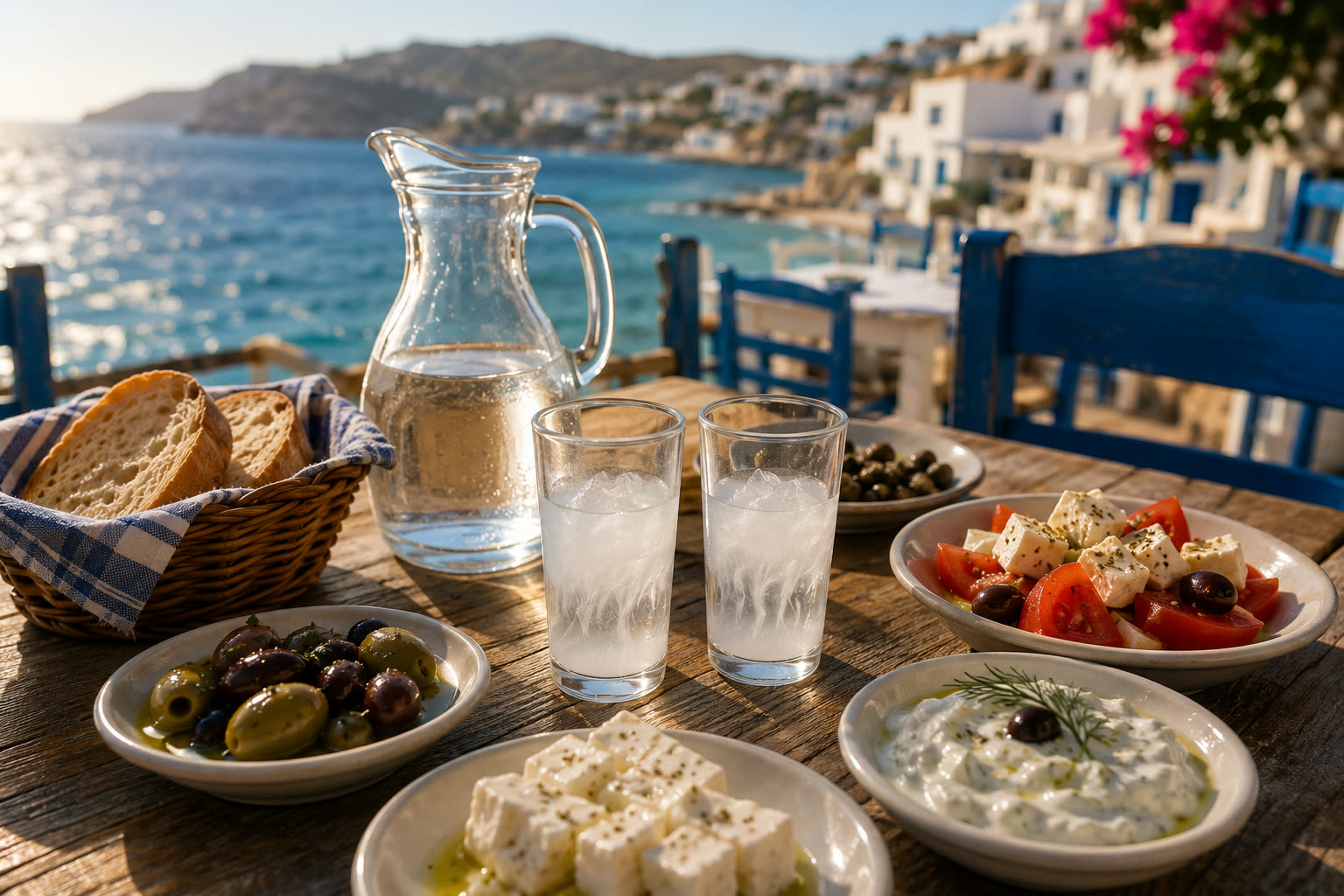
If you've ever watched someone pour water into a crystal-clear glass of ouzo, you've probably had the same reaction I did… "Wait…what just happened?"
One moment it's perfectly clear. The next, it's a beautiful cloudy white.
Of course, I had to know why. As I dug into the answer, I discovered this wasn't just a fun bit of chemistry. It was a story about hospitality, trust, and one of the reasons I love traveling so much: sometimes the smallest moments tell us the most about a place.
Long before scientists had a name for it, Greek innkeepers had a trick for spotting a cheater — and it was hiding in the bottom of a glass.
Picture a taverna table somewhere on the islands. Late afternoon light, a little plate of olives and feta between you and whoever you came with, and a small glass of something perfectly clear sitting in front of you. Your host tips a splash of water in. And before your eyes, without a spoon, without a stir, the whole thing goes cloudy — a soft, milky white, like someone poured a drop of cream into tea.
If you've never seen it happen, it stops you cold. If you have, you probably still watch it every single time. I know I do.
That's ouzo. And that little disappearing act has a name: the ouzo effect.
What's happening in the glass
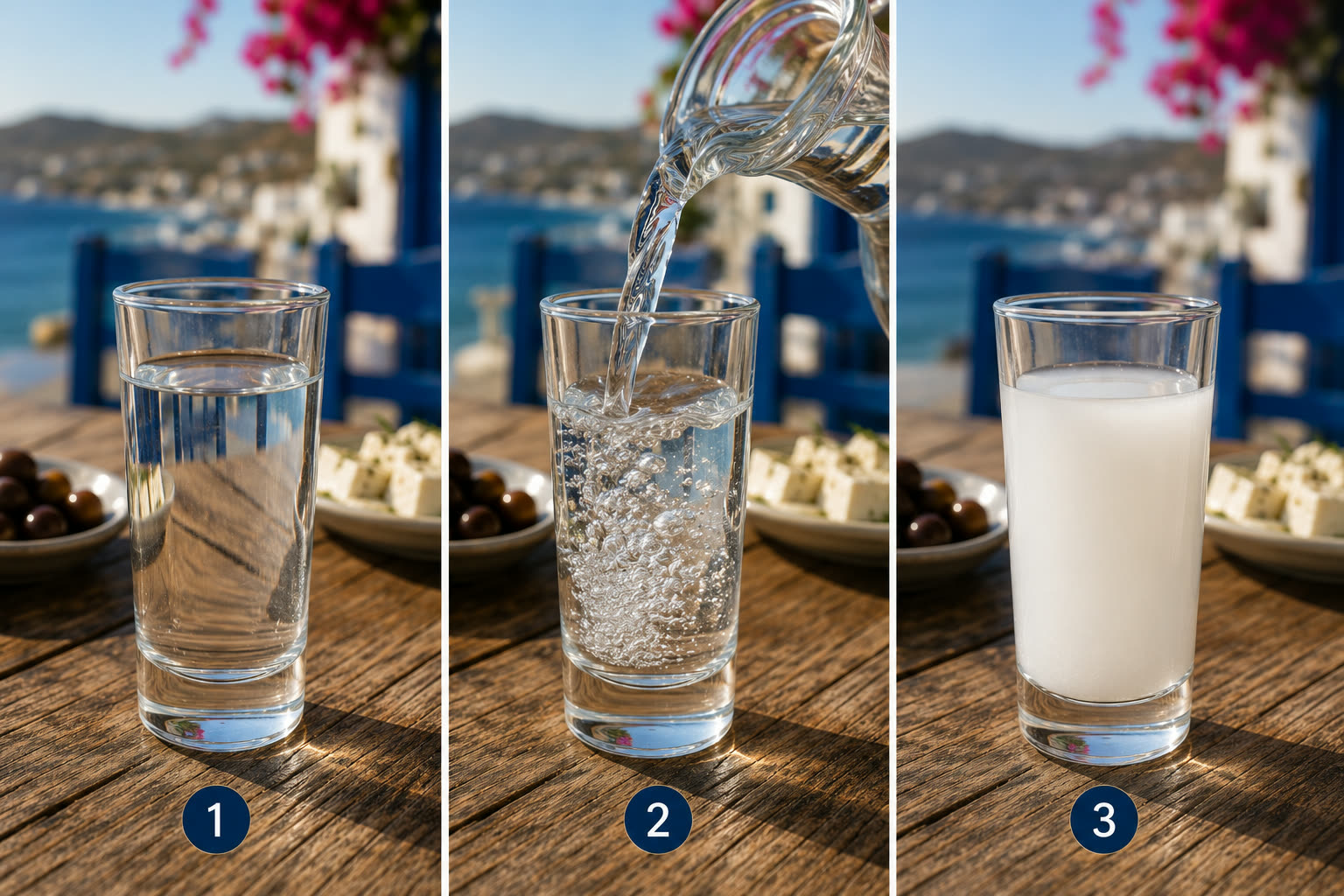
Ouzo gets its flavor from anise — the same licorice-forward note you taste in the drink — and anise oils dissolve beautifully in alcohol. Not so much in water. So when water hits the glass, the balance of alcohol to water shifts, and those oils can't stay dissolved anymore.
They don't separate out cleanly like oil and vinegar, though. Instead, they form millions of impossibly tiny droplets suspended in the liquid — so small that instead of floating to the top, they just scatter light in every direction. That scattering is what your eye reads as milky white.
It's the same basic trick behind absinthe's famous "louche," and chemists still study it today, because the way ouzo pulls this off — without needing anything extra to hold those droplets in suspension — is stranger and more stable than it has any right to be.
The part that turns chemistry into a story

The old-timers in Greece didn't need a lab to know what was going on. They just knew that cloudier meant better. A weak, watered-down, cheaply made ouzo wouldn't cloud the same way — there simply wasn't enough real anise oil in it to put on the show.
So for generations, before anyone had a microscope pointed at a wine glass, that milky swirl was proof. Proof you were getting the real thing. Proof nobody at the table was being cheated.
That's the part I love most about travel, honestly — it's rarely just the thing in front of you. It's what the thing meant to the people who did it first. A cloudy glass of ouzo isn't just a party trick for tourists. It's centuries of Greek hosts quietly proving their honesty, one pour at a time, long before anyone wrote the rule down.

So the next time someone hands you a small glass in Greece and a little pitcher of water on the side, don't rush it. Pour slow. Watch it turn. And know that the milky cloud swirling in your glass is carrying a little bit of Greek history along with it — a tradition of hospitality you can actually see happen, right there in your hand.
☕ Gina's Two Cents

Okay…I already know myself. I'd be sitting there saying, "Do that again!" 😂 It's funny how the little things become some of my favorite travel memories. Sure, Greece has incredible sunsets, but watching a simple glass of ouzo turn cloudy while learning the story behind it? That's the kind of moment that sticks with me long after I get home.
✈️ Thinking About Visiting?
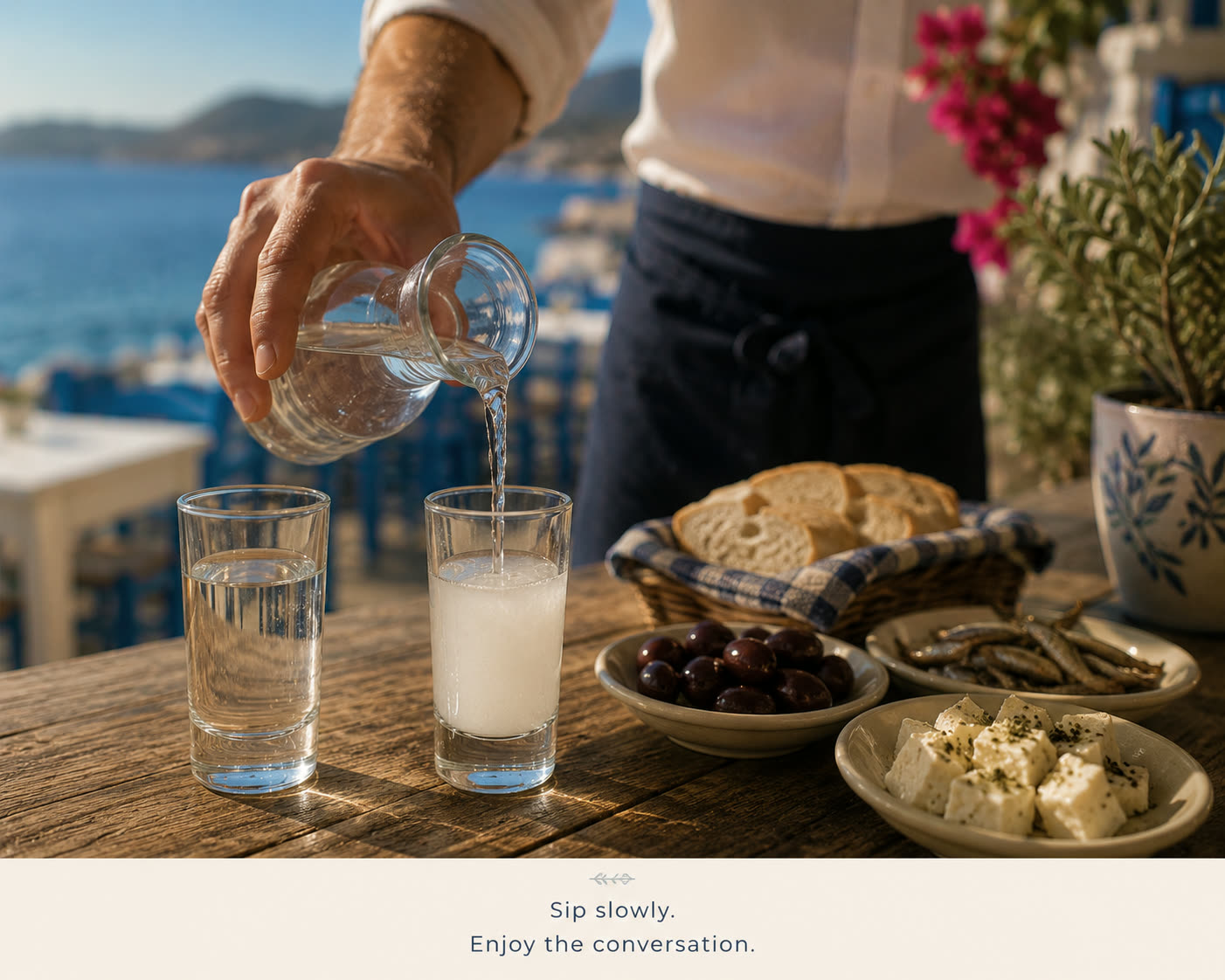
Ouzo is easy to find almost anywhere in Greece — tavernas, ouzeries, and even corner cafes will pour it without hesitation. Ask for it "with water and ice" if you want the full effect, and let your host guide the order (water first, then ice) — it's part of the ritual, not just a suggestion. Pair it with mezedes rather than drinking it alone, and give yourself time; ouzo is meant to be sipped slowly over conversation, not rushed. If you're island-hopping through Lesvos, keep an eye out for local Plomari ouzo — it's considered some of the best in the country.

Some journeys stay with us because of the places we see. The best ones stay with us because of the stories we bring home.
Thank you for traveling with me.
Until next time,
Gina Renee